
Kleen Freek Knowledge Center
This is a helpful guide we provide that is packed full of help information of organic growth and inorganic debris that exist on your home or buildings exterior
Gloeocapsa Magma
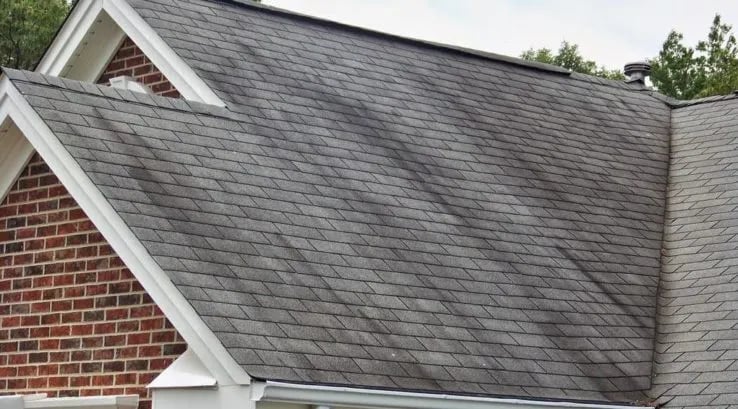
Gloeocapsa magma is a resilient, ancient species of cyanobacteria (often mistaken for mold or algae) that is responsible for those ugly black streaks you see on asphalt shingle roofs. Unlike other growths, this one actually "eats" your house.
The "Limestone Eater"
Primary Food Source: Modern asphalt shingles contain limestone (calcium carbonate) as a filler to add weight and durability. Gloeocapsa magma feeds specifically on this limestone.
Structural Thinning: As the bacteria consumes the limestone, the shingles become thinner, lighter, and more brittle. This leads to premature aging and significantly reduces the roof's lifespan.
Major Downfalls for Your Building
Granule Loss: As the bacteria eats the limestone "glue" holding the shingles together, the protective ceramic granules start to fall off and wash into your gutters. Once the granules are gone, the shingle has zero UV protection and will curl or crack quickly.
Property Value & "Curb Appeal": It makes even a relatively new roof look 20 years old and "dirty." In many neighborhoods, HOAs will issue fines for these streaks because they signal a neglected property.
Moss
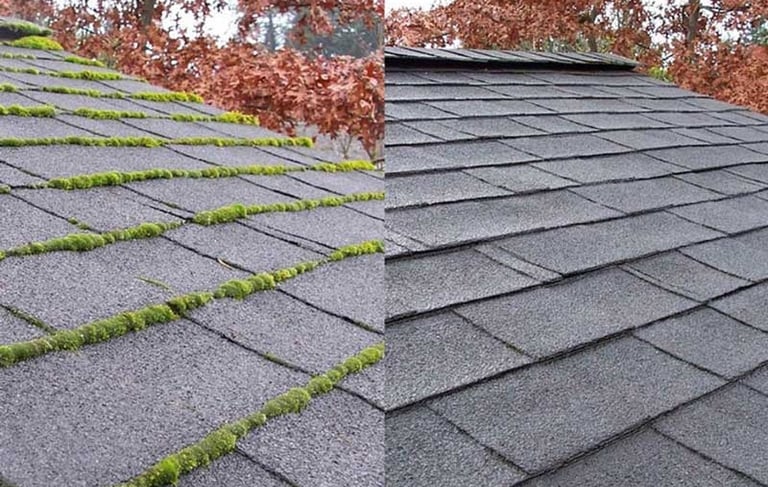
Moss is a simple plant with a shallow root system (rhizoids). It loves damp, shaded areas and acts like a heavy, water-soaked carpet on your building causeing uneeded weight, shingle lifting and decay.
The "Sponge" Effect
Water Retention: Moss can hold several times its own weight in water. This keeps your roof or siding constantly wet, even during dry spells.
Freeze-Thaw Damage: In the winter, that "sponge" freezes. The ice expands, physically lifting shingles or cracking mortar joints. This is a leading cause of roof leaks and structural masonry failure.
Major Downfalls for Your Building
Shingle "Lifting": As moss grows under the edge of a roof shingle, it acts like a lever, slowly prying the shingle upward. This breaks the sealant strip and allows wind or driving rain to get underneath.
Structural Decay: Constant moisture against wood or masonry leads to rot and crumbling. If moss grows on a brick wall, its roots can actually penetrate the mortar, turning a solid wall into a "loose" pile of bricks over time.
Lichen
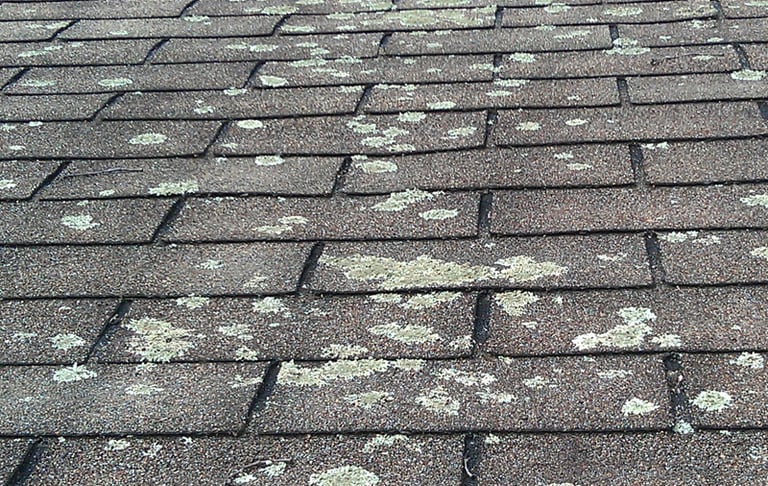
Of all the organic growth on a building, lichen is arguably the most destructive because it isn't just sitting on the surface—it’s physically anchored to it. Lichen is a "symbiotic" organism (part fungus, part algae) that acts like a tiny, living jackhammer.
The "Root" System (Rhizines)
Physical Anchoring: Lichen uses root-like filaments called rhizines to bore into the microscopic pores of your roofing shingles, stone, or siding.
Mechanical Damage: As lichen hydrates (rains) and dehydrates (sun), it expands and contracts. This constant movement exerts enough force to pull up the protective granules on asphalt shingles or cause "pitting" in stone and masonry.
Major Downfalls for Your Building
Roof Failure: On a roof, lichen is a "shingle killer." By stripping the granules, it exposes the underlying asphalt to UV rays, leading to premature drying, cracking, and leaks. It can easily shave 10+ years off the life of a roof.
Moisture Traps: Lichen is highly absorbent. It acts like a sponge, holding water against the building surface for long periods. In winter, this trapped water freezes and expands, causing micro-cracks to widen into major structural gaps.
Algae/Mold / Mildew
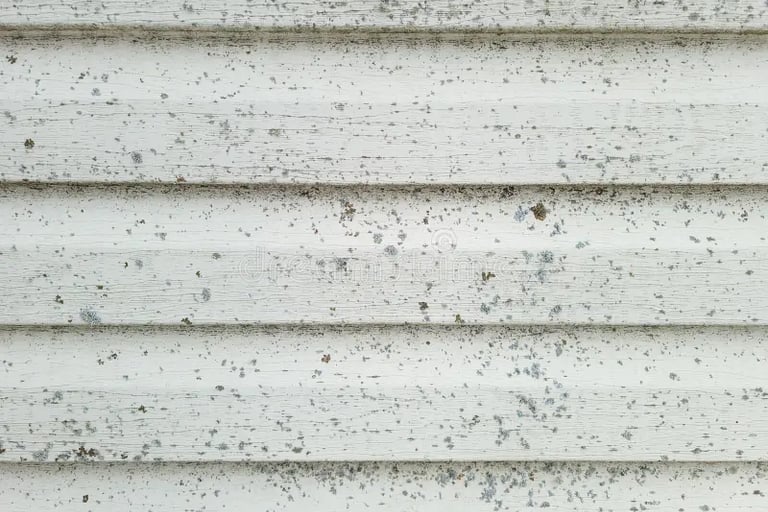
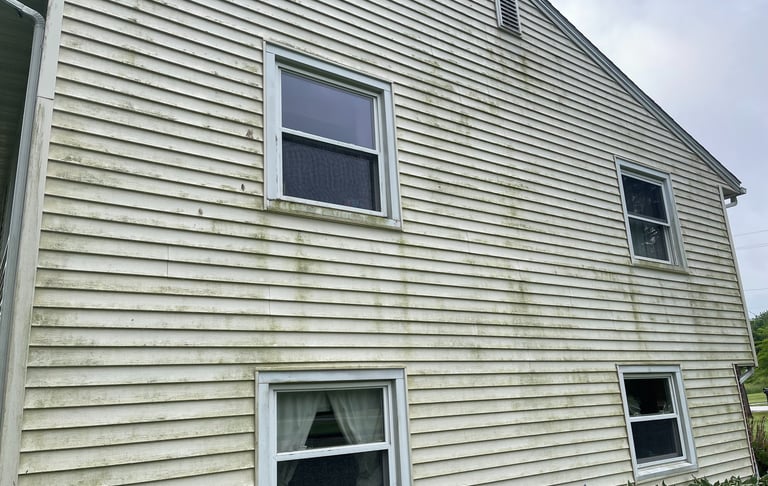
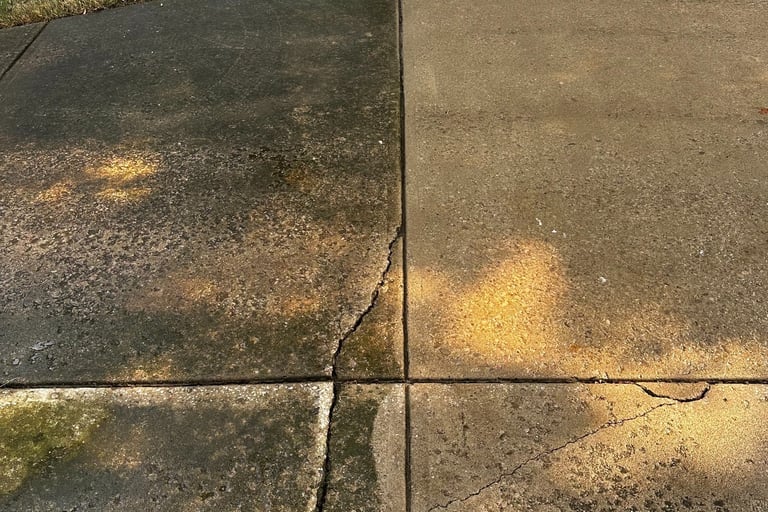
While pollen and dust are mostly "skin deep," mold, mildew, and algae are biological growths that actively feed on your building's exterior and can cause lasting damage.
The "Root" of the Problem
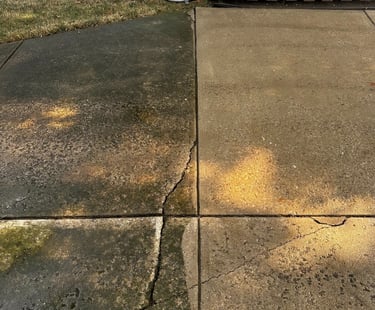
Surface Etching: Unlike dust, these are living organisms. They produce mild acids as they grow, which can etch or pit the finish on painted wood, aluminum siding, and even stone over time.
Expansion into Gaps: These growths thrive in the dark, damp gaps between siding panels or under shingles. As they colonize these areas, they can trap moisture against the house's sheathing, leading to hidden wood rot.
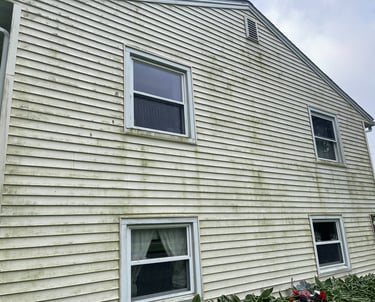
The "North Side" Syndrome: Because they crave shade and moisture, they usually appear as green (algae) or black (mold/mildew) stains on the north side of the building.
Health Hazards: Mold and mildew release spores. If they grow near windows, doors, or HVAC intakes, these spores can enter the home, triggering respiratory issues, allergies, and "sick building syndrome."
Pollen / Dirt / Dust
Dirt, Dust and pollen can accumulate from the air and settles on surfaces, creating a layer that can attract other types of debris and trap moisture that will lead to the mold/algae growth over time.
Aesthetic Decay: Layers of dust and pollen quickly dull the "pop" of your home's color, making even relatively new siding look aged and neglected.
Health Concerns: High concentrations of pollen on your exterior can trigger seasonal allergies for occupants every time they walk through the door or open a window.
Permanent Staining: If organic matter like bird droppings or tannin-heavy dust (from certain trees) sits too long in the sun, it can "bake" into the vinyl or paint, leaving permanent ghosting even after a professional wash.
Oxidation
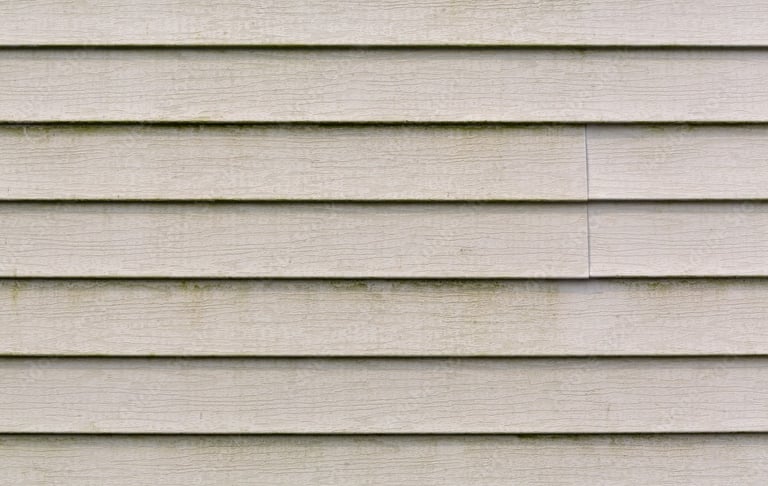
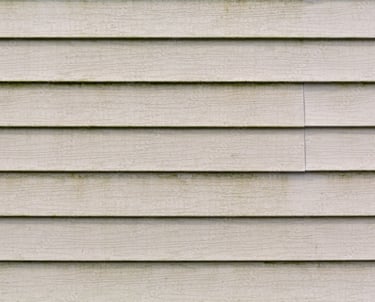
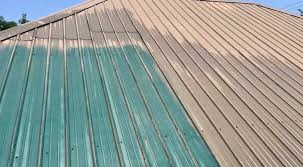
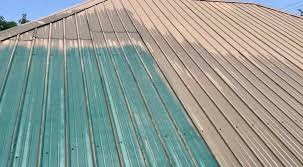
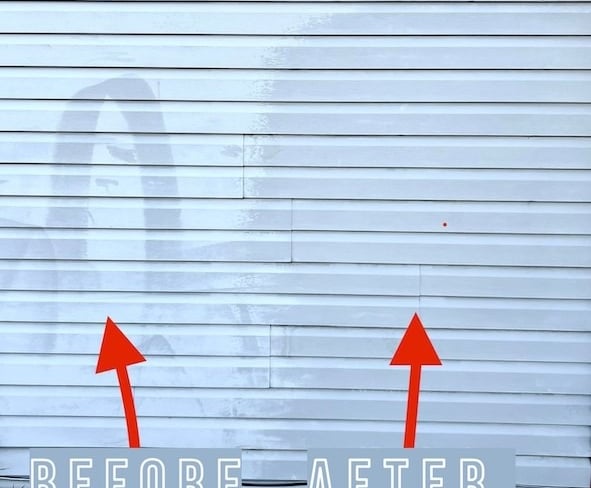
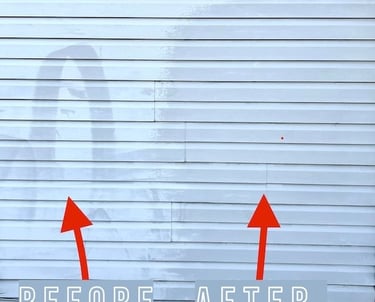
Oxidation on siding is a natural weathering process where the surface material—typically vinyl or the paint on aluminum—breaks down after long-term exposure to sunlight, oxygen, and moisture. This degradation creates a characteristic white, chalky powder that makes the siding look dull, faded, or streaky. If left alone and not treaded Oxidation can shorten the lifespan of your siding/roof.
How to Identify
The Finger Test: Run your finger or a dark, dry cloth along a dry section of the siding. If it leaves a powdery, chalk-like residue on your skin or cloth, the siding is oxidized.
Visual Cues: Look for "ghosting" or white streaks, especially on the sunniest sides of the building (typically south and west-facing walls).
"Hot Spot" Patterns: On vinyl siding, you might see white dots or vertical lines every 16 inches. This happens because the sun superheats the nails or studs behind the siding, causing those specific areas to oxidize faster
Efflorescence
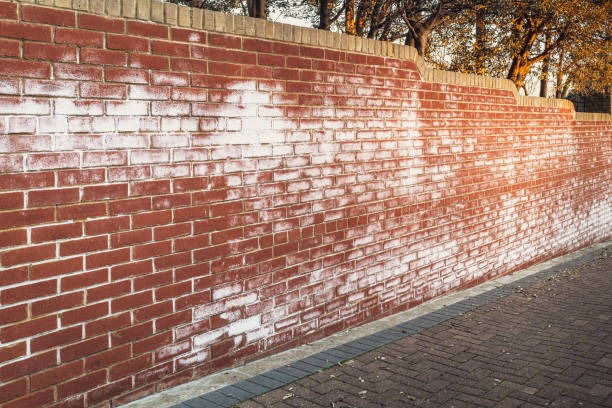
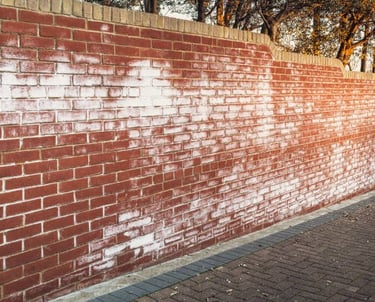
Efflorescence (often shortened to Efflo) is a white, powdery, or crystalline deposit of salts that forms on the surface of porous materials. It can occur on brick, concrete, stucco, and other building materials. These Salts are usually only aesthetic but could cause risks if it comes in contact with skin or eyes.
Although Efflo is a cosmetic nuescence its presence is a "red flag" for deeper moisture problems that can lead to severe structural and health issues
© 2026 Kleen Freek LLC | Sitemap |

Contact Us


Welcome to Kleen Freek Pressure Washing, your trusted partner for safe, high-quality exterior cleaning in Northeast Ohio. Based in Willoughby, Ohio, providing full exterior care for homeowners and businesses who want it done right.
Mon - Sat: 8am - 8pm
Sunday: 8am - 4pm